
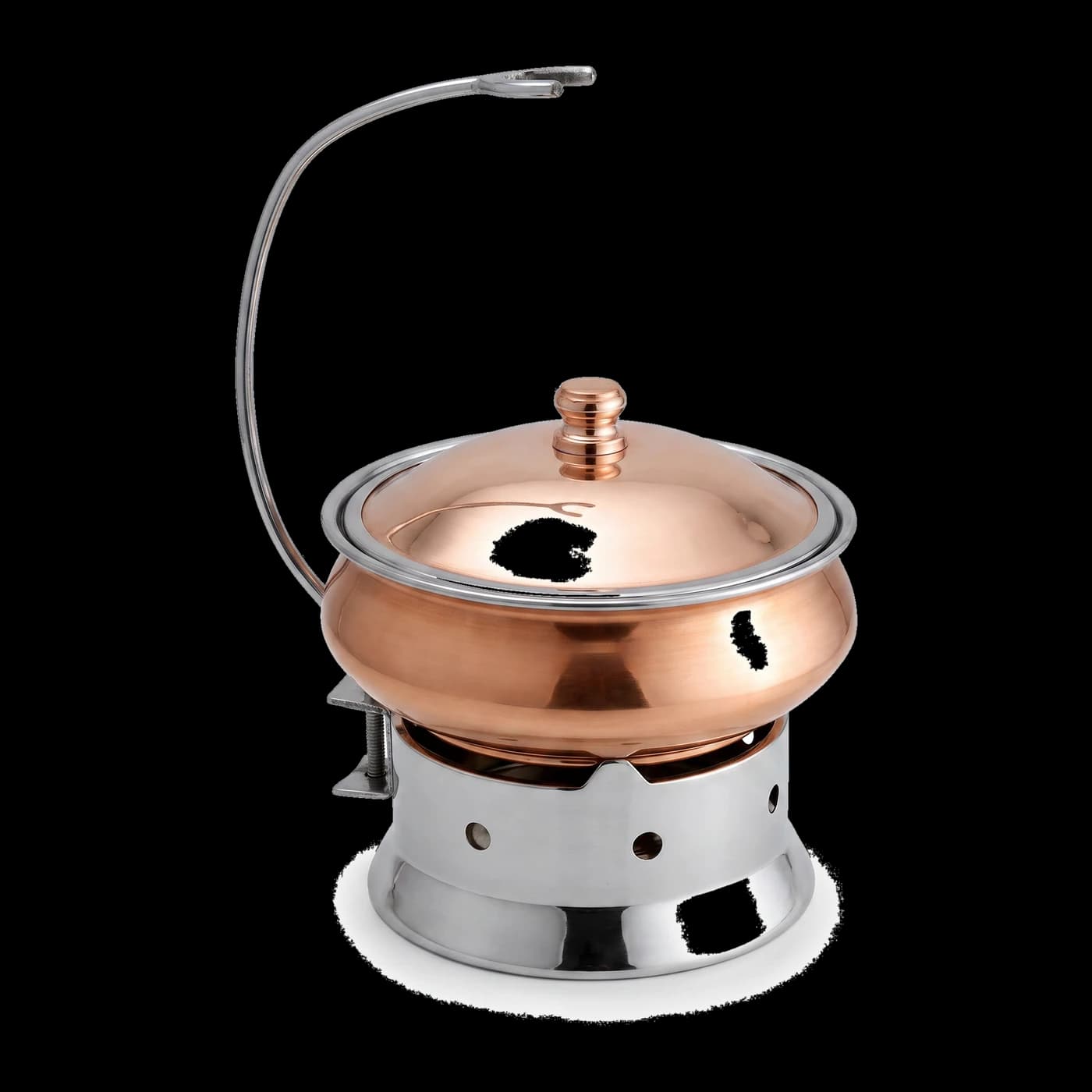
Copper hotelware commands a room. The warm amber glow of a copper chafing dish or serving handi communicates craftsmanship in a way that stainless steel simply cannot. But that beauty is conditional — copper that is not maintained properly turns from a statement piece into an embarrassment. This guide gives you the exact routines used to keep copper hotelware looking polished and performing reliably through years of service.
Understanding What You Are Working With
Commercial copper hotelware is not solid raw copper throughout. High-quality pieces — including all copper hotelware manufactured by Lotus Metal Works — have a stainless steel or tin lining on the food-contact interior. This is important for two reasons:
- Food safety. Raw copper reacts with acidic foods (tomatoes, citrus, vinegar-based dishes) and can leach copper salts into food at levels that cause illness. The stainless steel lining prevents any contact between food and copper.
- Cleaning approach. The exterior — the part guests see — is copper and requires copper-specific care. The interior is stainless steel and can be cleaned with standard commercial kitchen methods.
Always verify that any copper piece you purchase has this lining. Unlined copper should never be used to serve food.
The Daily After-Service Routine
Most damage to copper hotelware happens during the period between service ending and proper cleaning beginning. Acidic food residue left sitting in or on copper accelerates tarnishing and, over time, pitting.
- Remove food residue immediately after service — do not let it sit overnight.
- Rinse the interior with warm water to remove residue before detergent is applied.
- Wash the interior with a soft cloth and mild dish soap. Rinse thoroughly.
- For the copper exterior: wipe down with a damp cloth to remove any splashes or fingerprints. Dry completely with a clean, soft cloth — water spots on copper are stubborn and worsen over time.
- Never stack copper pieces without a cloth barrier between them. Direct contact between pieces causes scratching.
Weekly Deep Polish
Copper tarnishes as it oxidises — the surface darkens from bright amber to brown. A weekly polishing routine keeps the warm, bright tone that makes copper hotelware visually distinctive.
Method 1 — Commercial Copper Polish
Products like Brasso, Peek, or purpose-made catering copper polishes contain mild abrasives that remove the oxidation layer. Apply a small amount to a soft cloth, work in circular motions, then buff with a clean dry cloth. This takes 3–5 minutes per piece and gives the longest-lasting result.
Method 2 — Salt and Vinegar (Natural Alternative)
Mix equal parts white vinegar and fine salt to form a paste. Apply to the copper exterior with a soft cloth, rub gently, rinse with warm water, and dry immediately. This method is effective and uses no chemicals, but requires more effort for heavily tarnished pieces. Do not allow the vinegar paste to contact the interior lining or any stainless steel joints.
Method 3 — Lemon and Salt
Cut a lemon in half, dip it in fine salt, and rub directly on the copper surface. The citric acid and abrasive salt remove tarnish quickly. Rinse and dry immediately afterwards. This is the fastest method for spot-polishing individual areas.
What to Never Do
- Never put copper in a dishwasher. Dishwasher detergents are highly alkaline, temperatures are too high, and the mechanical action strips the surface. A single dishwasher cycle can permanently damage the copper finish.
- Never use steel wool, scouring pads, or abrasive cleaning powders. These scratch the copper surface and create micro-grooves where tarnish accumulates even faster.
- Never soak copper in water. Prolonged water contact causes uneven tarnishing and can affect solder joints on handles and stands.
- Never use bleach or chlorine-based cleaners. These react with copper and cause irreversible discolouration.
- Never leave copper near open salt dishes. Airborne salt accelerates tarnishing significantly.
Patina vs Tarnish — Knowing the Difference
Not all darkening of copper is problematic. A deliberate patina — a smooth, even darkening of the surface — is considered desirable on many heritage and artisanal copper pieces. It develops gradually with use and handling, and gives copper a depth of colour that new pieces lack. Some high-end properties intentionally cultivate a light patina on their copper display pieces.
Tarnish, by contrast, is uneven, blotchy, and includes greenish discolouration (verdigris). This is the result of copper oxidising unevenly — often from moisture, fingerprints, or food residue not being cleaned promptly. Tarnish is what the cleaning routine above is designed to prevent.
The general rule: if the discolouration is even and the piece still looks intentional, it is patina — maintain it with light cleaning. If it is blotchy, green-tinged, or has visible spots, it is tarnish — use the deep polish method to remove it before it worsens.
Storage Between Service Periods
Copper hotelware stored incorrectly tarnishes even without being used. Follow these storage practices:
- Polish pieces before storing, not just before displaying — this removes any residue that would accelerate oxidation during storage.
- Wrap each piece individually in soft, dry cloths or acid-free paper. Never use newspaper — printer ink contains acids that stain copper.
- Store in a dry, ventilated area away from high humidity. Avoid storing copper near dishwashers or steam sources.
- For long-term storage (weeks or more), apply a thin coat of food-safe mineral oil or a specialised copper lacquer to slow oxidation.
Quick Reference: Care Summary
| Task | Frequency | Method |
|---|---|---|
| Wipe exterior + dry | After every use | Damp cloth, then dry immediately |
| Wash interior | After every use | Mild soap, soft cloth, warm water rinse |
| Full copper polish | Weekly | Commercial polish or vinegar + salt paste |
| Inspect lining and joints | Monthly | Visual check for wear, loosening, or damage |
| Deep tarnish removal | As needed | Lemon + salt, or commercial polish with extra effort |
Expected Service Life
Copper hotelware that is properly maintained lasts 15–20 years in a commercial environment — often longer. The copper itself does not degrade; what deteriorates is the interior lining and the mechanical components (handles, stands, hinges). Inspect the lining annually for wear patches. If the stainless steel lining shows significant thinning or damage, the piece should be retired from food-contact service.
At Lotus Metal Works, we can re-tin or re-line copper pieces for clients who want to extend the life of older inventory. Contact us with a photo and we can advise on whether relining is worthwhile for a particular piece.
Questions about your copper hotelware?
Whether you are buying for the first time or maintaining existing pieces, our team can advise on care, relining, or sourcing replacements — custom finishes and engravings available.
Get in Touch