
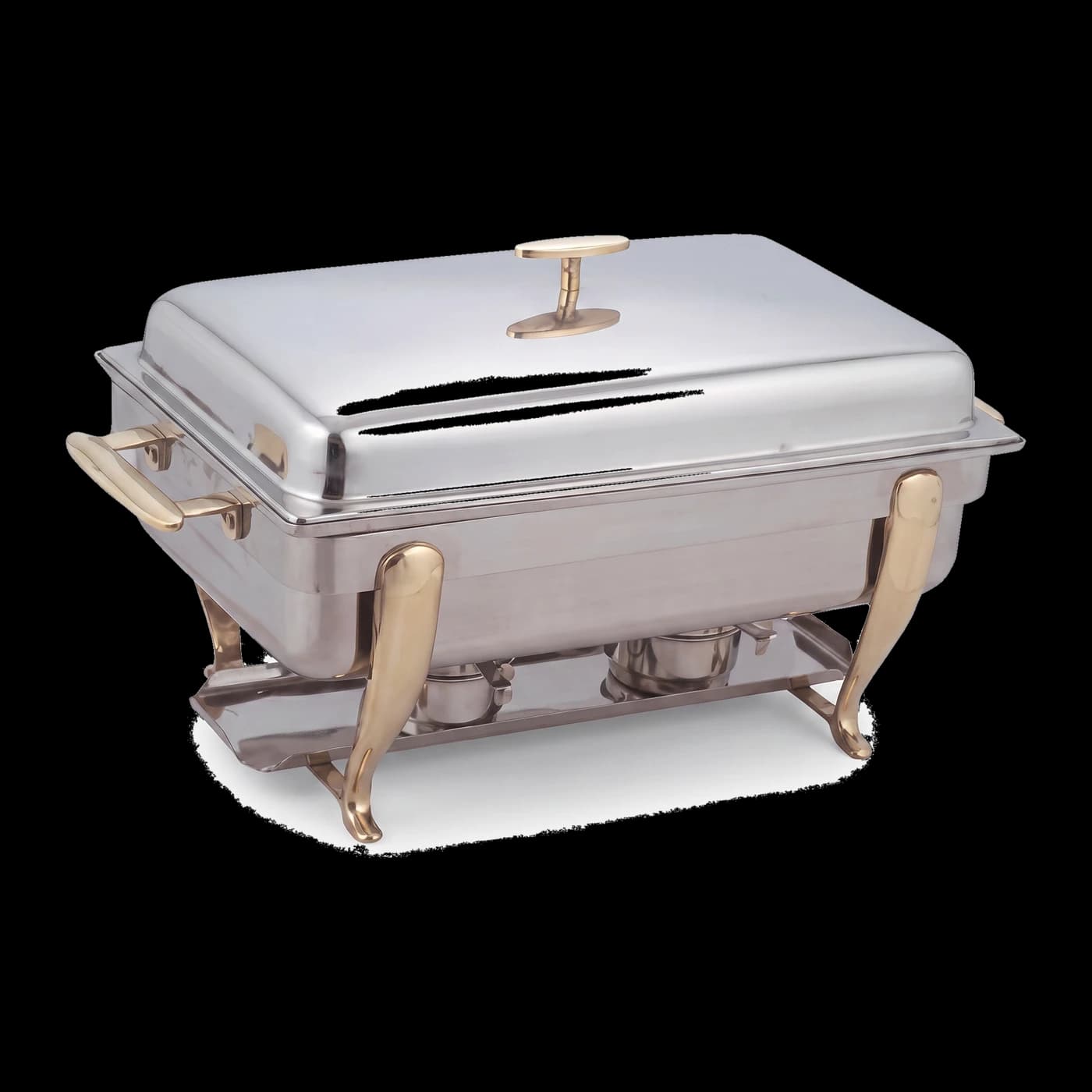
A well-run hotel buffet looks effortless from the guest's side of the counter. On your side, it is the result of deliberate planning — the right equipment, in the right quantity, arranged so that guests flow smoothly, food stays at safe temperatures, and your team can replenish without disrupting service. This guide covers everything an F&B manager or procurement lead needs to set up a professional buffet operation from scratch.
Step 1 — Calculate Your Equipment Needs
Start with guest count. Everything else follows. As a working rule:
- One full-size chafing dish (GN 1/1) holds enough for 50–80 portions per service cycle.
- For a simultaneous sitting of 200 guests, budget 3–4 full-size units per hot dish — one active on the counter, one or two in rotation from the kitchen.
- Half-size units (GN 1/2) serve accompaniments, sauces, and breakfast items for up to 30–50 portions.
A quick reference for common event sizes:
| Guest Count | Full-Size Chafing Dishes (per hot dish) | Half-Size Units (sides/condiments) |
|---|---|---|
| Up to 50 | 1 | 2–3 |
| 50–150 | 2 | 4–6 |
| 150–300 | 3–4 | 6–8 |
| 300–500 | 5–6 | 8–12 |
Step 2 — Plan the Station Layout
The sequence of stations should follow a logical flow that prevents queuing bottlenecks and keeps hot and cold foods well separated.
The Standard Flow
- Salads and cold starters — Position these at the beginning of the buffet run, away from heat sources. Use refrigerated display units or crushed-ice beds to maintain temperatures below 5 °C.
- Soups — Immediately after the cold section, using soup tureens on separate stands so the hot element is isolated.
- Main hot dishes — The heart of the buffet. Position chafing dishes in a straight line or a gentle arc. Leave at least 45 cm between each unit so guests can serve themselves without crowding.
- Bread and accompaniments — Towards the end of the main run, where they act as natural pacing devices.
- Desserts — On a separate table entirely, ideally across the room. This separates the traffic streams and keeps dessert visually distinct.
Counter Depth and Aisle Width
A buffet counter should be no deeper than 60–75 cm so guests can reach the back without leaning. Leave a minimum of 1.5 m of aisle space in front of the counter — 2 m where two guests might need to pass each other simultaneously.
Step 3 — Manage Heat Zones
Food safety regulations in commercial kitchens universally require hot food to be held above 60 °C. Below this, bacteria multiply rapidly. Your chafing dishes are your primary tool for maintaining this threshold during service.
| Heat Source | Best For | Notes |
|---|---|---|
| Chafing fuel (Sterno/gel) | Outdoor events, temporary setups | Each can lasts 2–4 hrs; plan rotations |
| Induction burner | Permanent buffet stations | Precise temperature control, no fuel cost |
| Electric chafer | High-end hotel restaurants | Requires access to power points near counter |
Always fill the water pan before placing the food pan. The water bath creates gentle, indirect heat that prevents scorching — particularly important for dairy-based sauces and egg dishes.
Step 4 — Build Your Equipment Checklist
Before your first service, confirm every item on this list is in place and tested:
- Full-size chafing dishes (per the quantity table above) with matching food pans and water pans
- Half-size chafing dishes for sides and condiments
- Soup tureens with ladles
- Serving utensils — one per dish minimum; two if traffic is expected to be high
- Utensil rests for every serving spoon or tong
- Fuel cans or induction burners (one per chafing dish)
- Spare food pans in the kitchen for rotation
- Sneeze guards on any open-top display
- Digital probe thermometers — check food temperatures every 30 minutes during service
- Decorative elements — bread baskets, floral arrangements, menu cards — positioned so they do not obstruct the serving flow
Step 5 — Presentation Details That Elevate the Buffet
The physical setup is only half of a successful buffet. Visual presentation drives the guest's first impression and perceived value.
- Height variation — Use risers or stands to create different levels. A flat buffet looks like a canteen. Height draws the eye and makes the spread look more abundant.
- Copper accents — Even a single copper handi or serving pot positioned at a station adds warmth and signals artisanal quality. This is why five-star properties mix copper and stainless rather than using one material exclusively.
- Consistent linen — Table coverings in a single colour family tie the layout together visually.
- Label every dish — Including allergen information. Guests should never need to ask what something is.
Common Mistakes to Avoid
- Over-filling food pans. A half-full pan looks more abundant than an overflowing one that has been stirred repeatedly. Rotate smaller portions more frequently instead of one large batch that sits for two hours.
- Placing cold and hot stations adjacent. The heat from chafing dishes raises the temperature of nearby salads and cold cuts, creating a food safety hazard.
- Ignoring the refill moment. Train staff to replace entire food pans rather than topping up — so guests never see a depleted dish, and the fresh pan is preheated in the kitchen before it reaches the counter.
- Under-staffing the buffet. A buffet still requires at least one staff member per six metres of counter during peak service — to monitor temperatures, replenish dishes, and maintain presentation.
Equip your buffet with the right hardware
We supply chafing dishes, soup tureens, and serving accessories in bulk — custom sizes, engravings, and finishes available. Let our team help you spec the right quantity for your operation.
Get in Touch