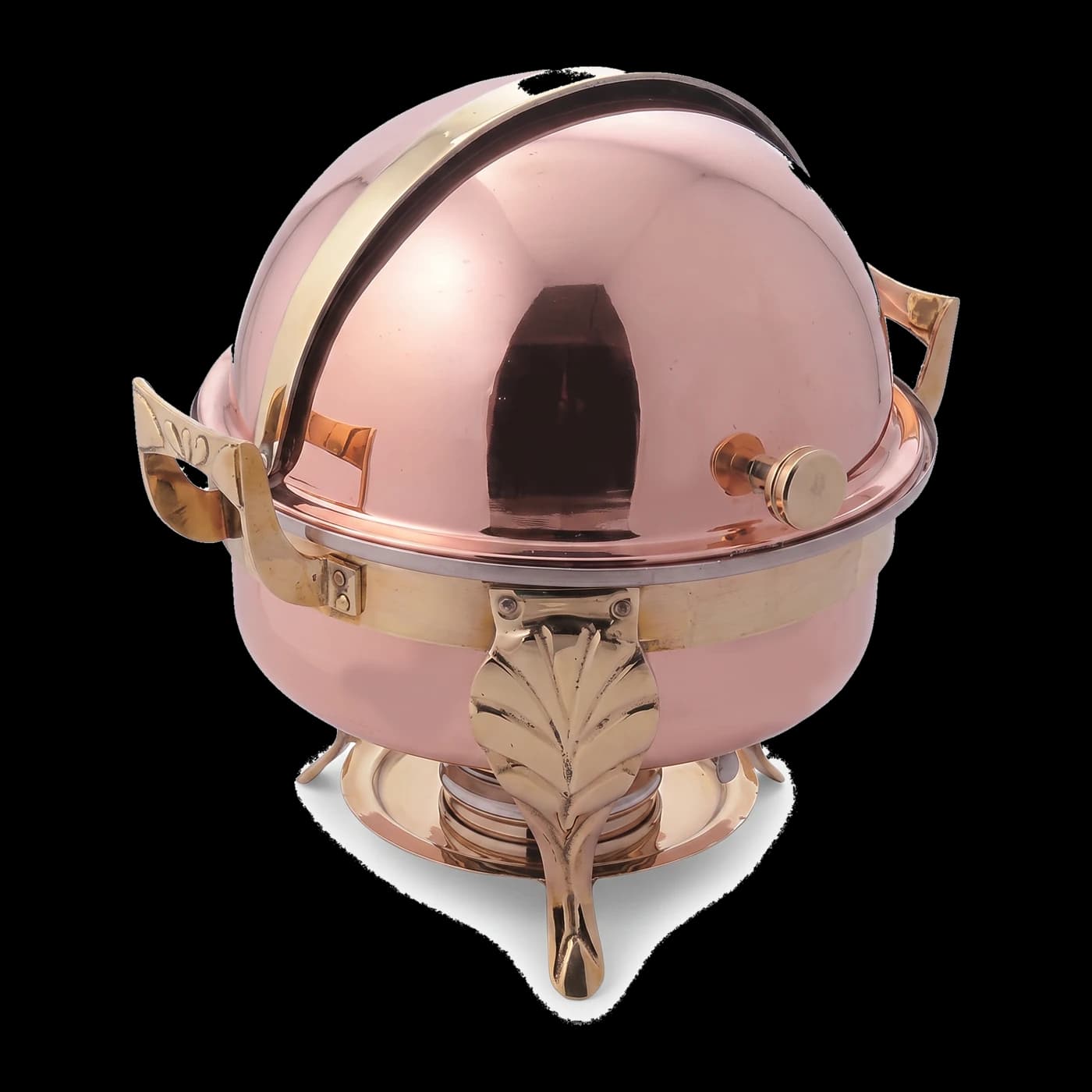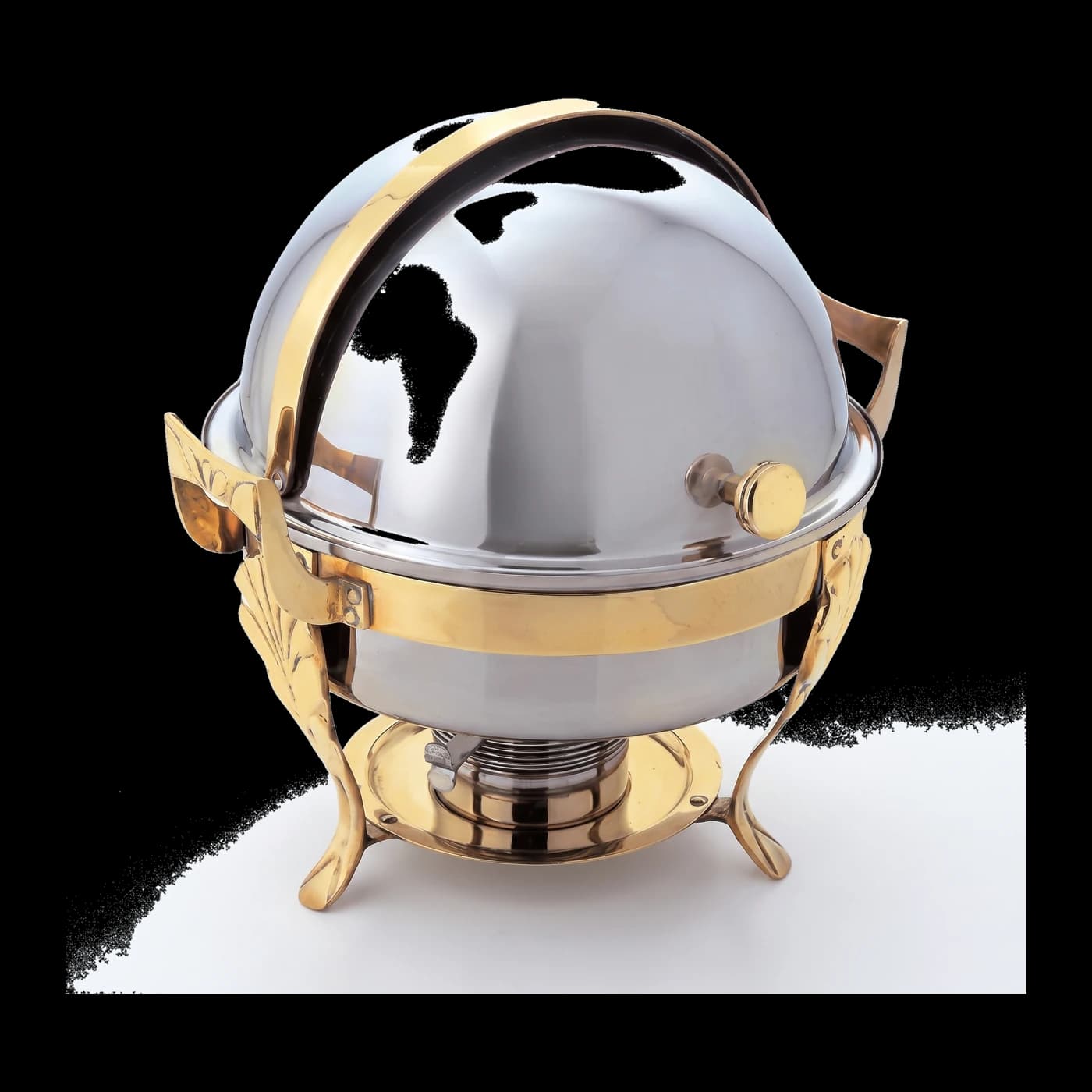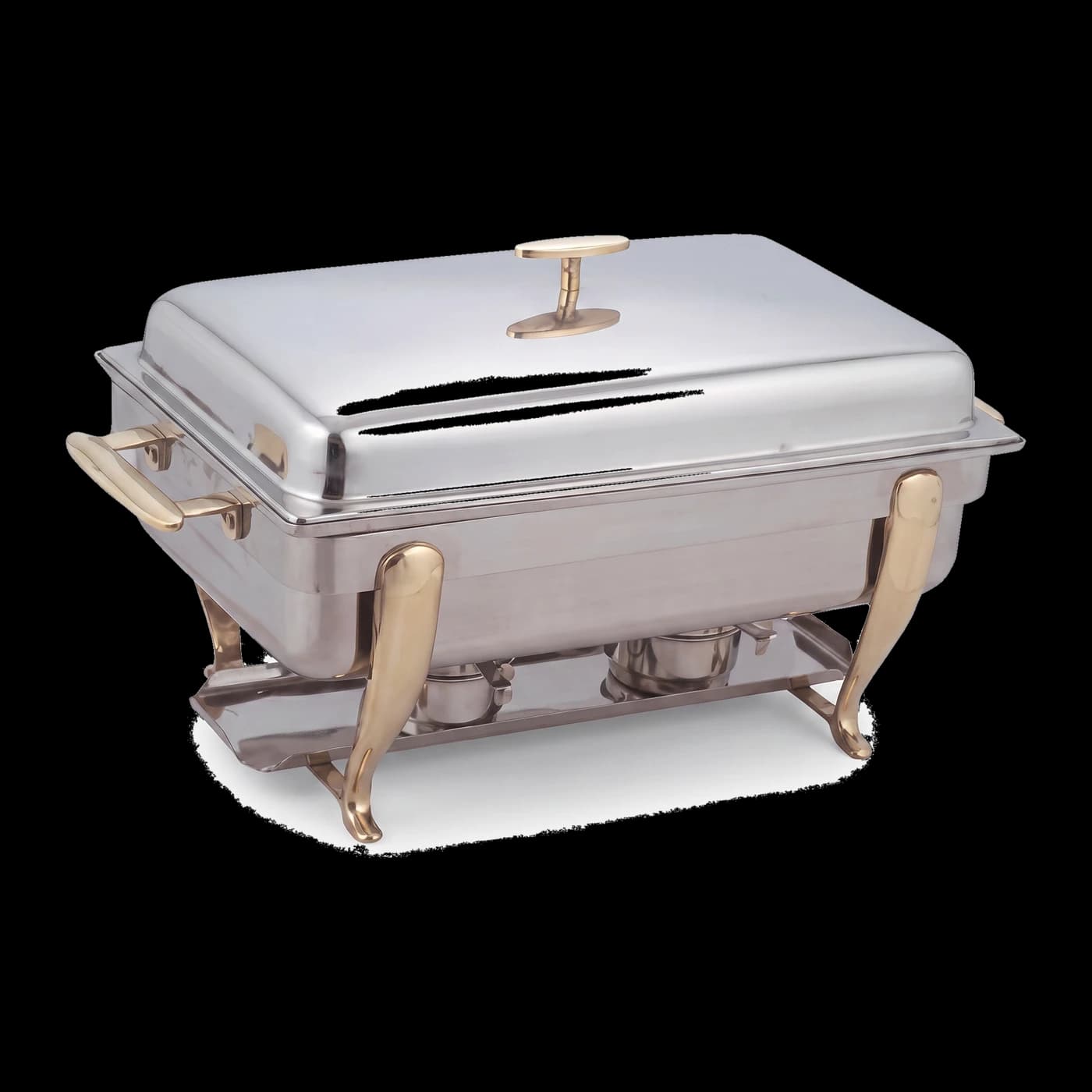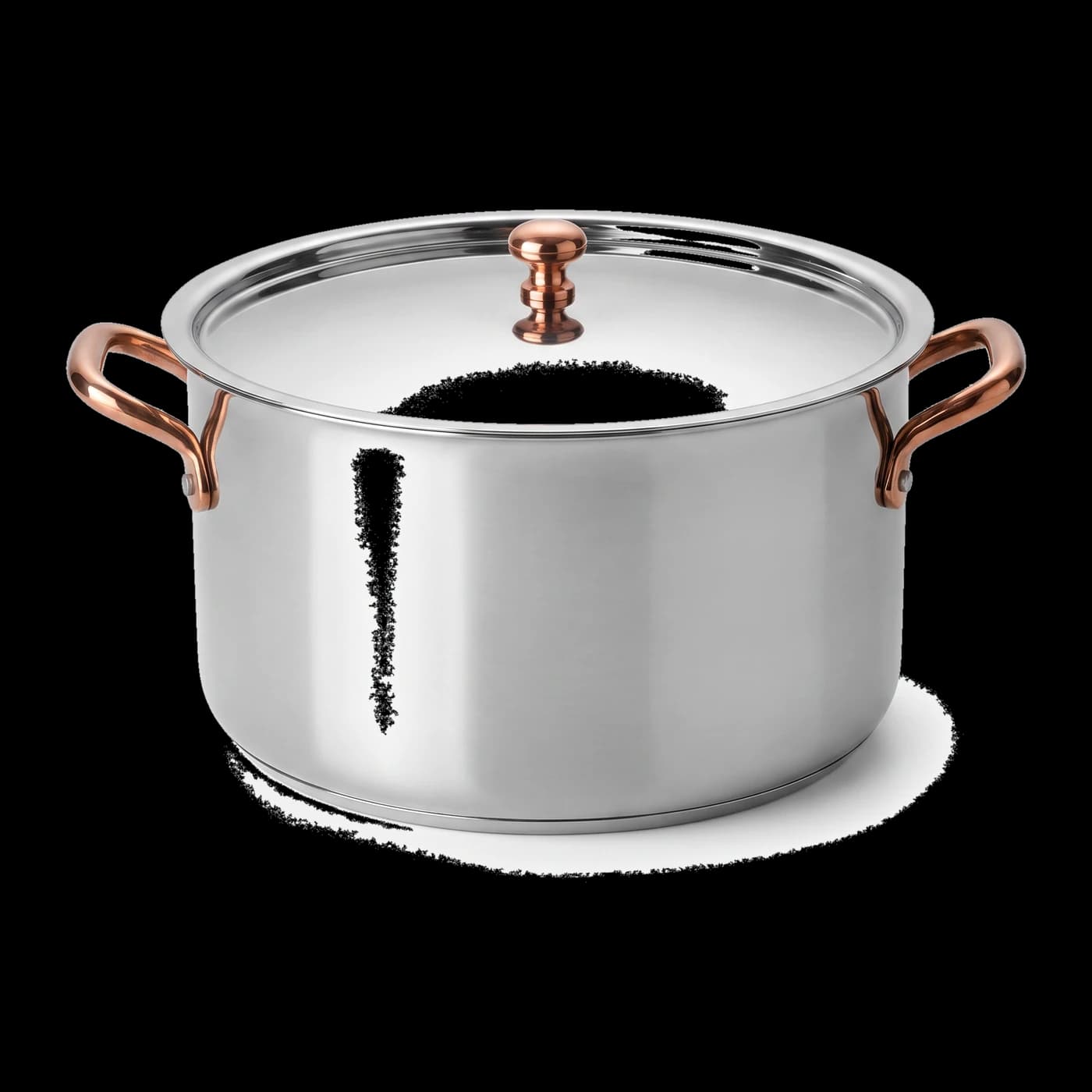
Two chafing dishes can look identical on a showroom floor and cost very different amounts — and eighteen months later, one of them has rust blooming around the weld seams while the other still polishes up like new. Almost always, the difference is the grade of stainless steel underneath the finish. This guide explains what the grades mean, which one belongs where in a hotel or restaurant, and how to check what you are actually being sold.
What Makes Steel “Stainless”
Stainless steel is ordinary steel alloyed with chromium. At roughly 10.5% chromium and above, the surface forms an invisible, self-repairing chromium-oxide layer — the “passive layer” — that blocks oxygen and moisture from reaching the iron underneath. Scratch it, and it reforms on its own. That layer is the entire reason stainless steel resists rust.
Two other elements decide how good that protection is:
- Nickel makes the alloy austenitic — non-magnetic, more ductile, easier to form into deep shapes, and significantly more corrosion-resistant. Nickel is also the most expensive ingredient, which is why it is the first thing cut from cheap steel.
- Molybdenum defends specifically against chlorides — salt, brine, coastal air, and chlorinated cleaning chemicals — which are exactly what attacks steel in a kitchen.
Reading the Numbers: 18/10, 18/8 and 18/0
You will see these ratios stamped on hotelware far more often than a grade number. They are simply chromium/nickel percentages:
- 18/10 — 18% chromium, 10% nickel. Effectively grade 304 at the upper end of its nickel range. The benchmark for quality serving ware.
- 18/8 — 18% chromium, 8% nickel. Also grade 304, at the lower end. Very good, marginally less corrosion-resistant than 18/10.
- 18/0 — 18% chromium, no nickel. This is grade 430, a ferritic steel. It is magnetic, notably less corrosion-resistant, and much cheaper.
All Lotus Metal Works stainless cookware — including our cooking pots and stock pots — is manufactured in 18/10 steel.
The Three Grades You Will Be Quoted
| Grade | Composition | Corrosion Resistance | Relative Cost |
|---|---|---|---|
| 201 | ~16–18% Cr, 3.5–5.5% Ni, high manganese | Low — pits and stains with salt and moisture | Lowest |
| 304 (18/8, 18/10) | 18% Cr, 8–10.5% Ni | High — the commercial kitchen standard | Moderate |
| 316 | 16–18% Cr, 10–14% Ni, 2–3% Mo | Very high — resists chlorides and salt air | Highest |
Grade 201 — Where the Savings Come From
Grade 201 replaces most of the expensive nickel with manganese and nitrogen. It looks the same when new, takes a mirror polish, and costs substantially less — which is exactly why it circulates widely in low-cost hotelware.
The problem shows up under real service conditions. With less nickel, the passive layer is weaker and repairs itself more slowly, so 201 pits and tea-stains where it meets salty food, acidic sauces, standing water, and aggressive detergents. In a buffet environment — hot water pans, salt, citrus, daily chemical washing — that is a matter of months, not years. It is acceptable for dry, decorative or low-contact items. It does not belong in a chafing dish water pan or any vessel holding food through a service.
Grade 304 — The Working Standard
Grade 304 is the default for commercial foodservice worldwide, and for good reason: it holds up to daily heat cycling, commercial dishwashers, acidic and salty foods, and years of polishing without losing its finish. It is non-magnetic, welds cleanly, forms into deep drawn shapes without cracking, and is fully food-safe.
For virtually everything on a buffet line — chafing dishes, soup tureens, serving trays, food inserts and cookware — 304 is the correct specification. Paying more for 316 here buys you very little.
Grade 316 — For Chloride Exposure
Grade 316 adds 2–3% molybdenum, which specifically resists chloride pitting. It earns its premium in genuinely aggressive environments:
- Beachfront and coastal properties, where salt-laden air attacks equipment continuously — a real consideration for hotels along the Karachi and Gwadar coast
- Poolside service areas, where chlorinated water and vapour are constant
- Seafood-heavy kitchens with sustained brine and saltwater contact
- Outdoor and rooftop dining installations exposed year-round to weather
Inside a normal, climate-controlled indoor kitchen, 316 is over-specification. Spend the difference on heavier gauge 304 instead — you will feel that improvement every day.
Grade Is Only Half the Story: Gauge
Buyers focus on grade and forget thickness, but gauge determines how a piece survives handling. Thin 304 dents when a banquet trolley clips a doorframe; thick 304 does not. Heavier gauge also means better heat retention in cookware and less warping in chafer food pans exposed to repeated heat cycles.
A useful field check: lift the piece. Two chafing dishes of the same size and grade should feel meaningfully different in weight if one is heavier gauge. Press the centre of a food pan with your thumb — quality gauge barely flexes. Also check where handles and legs attach: correctly welded and finished joins are the parts most likely to fail first on a cheaply made piece, regardless of grade.
How to Verify What You Are Being Sold
You cannot see the grade, but you can narrow it down before committing to an order.
- The magnet test. 304 and 316 are austenitic and essentially non-magnetic — a fridge magnet will barely cling. 430 (18/0) is strongly magnetic and will hold firmly. This test is useful but not conclusive: 201 is only weakly magnetic, and heavy forming can make even 304 slightly magnetic at rims and corners. Treat a strong pull as a red flag, not a weak pull as a guarantee.
- Ask for the mill certificate. Any manufacturer working with genuine 304 can produce the material test certificate from the steel supplier, showing the actual chemical composition. A vendor who cannot or will not is telling you something.
- Ask for a salt test sample. Request a sample piece, leave it in contact with a strong salt solution for 48 hours, then rinse and inspect. Low-nickel steel shows pitting or brown staining; genuine 304 will not.
- Judge the price against the market. Nickel is a globally traded commodity. If a quote sits dramatically below every other 304 quote you have received, the difference is coming out of the alloy, the gauge, or both.
Which Grade for Which Application
| Application | Recommended | Why |
|---|---|---|
| Chafing dishes and food pans | 304 (18/10) | Constant heat, moisture, salt and acid contact |
| Cookware, stock pots, kitchen sets | 304, heavy gauge | Direct heat, heavy handling, long service life |
| Soup tureens and bain marie units | 304 (18/10) | Prolonged contact with hot, salted liquid |
| Serving trays and display stands | 304 | Frequent washing; finish must survive polishing |
| Coastal, poolside or outdoor service | 316 | Molybdenum resists chloride and salt-air pitting |
| Tandoor and equipment outer bodies | 304 | High heat, humidity and daily kitchen impact |
Even Good Steel Rusts If You Treat It Badly
Grade 304 is corrosion-resistant, not corrosion-proof. Most rust complaints on genuine 304 trace back to how it is handled, not what it is made of:
- Steel wool and wire brushes embed carbon-steel particles in the surface, which then rust and look exactly like the stainless itself failing. Use nylon pads or stainless-safe scourers only.
- Chlorine bleach left standing attacks the passive layer directly. Never soak stainless in bleach solution, and rinse thoroughly if it is used at all.
- Salt left to dry on the surface concentrates as moisture evaporates, causing pitting. Rinse and dry after service rather than leaving pans overnight.
- Stacking wet traps moisture between surfaces and starves the passive layer of the oxygen it needs to repair itself. Dry before storing.
If you also run copper alongside your stainless, our copper hotelware care guide covers the very different routine that metal needs, and our copper versus stainless comparison covers where each material earns its place on a buffet.
The Short Version
Specify 304 (18/10) for everything that touches food or heat, step up to 316 only where salt or chlorine is a genuine daily presence, and treat 201 as a false economy for anything in active service. Then stop optimising the grade and start asking about gauge, weld quality and finish — because among reputable 304 manufacturers, those are what separate equipment that lasts five years from equipment that lasts twenty.
Lotus Metal Works has manufactured stainless steel hotelware in Pakistan since 1951, supplying hotel chains and catering operations that replace equipment on a decade cycle rather than an annual one.
Want the material specification on your quote?
Tell us what you are sourcing and we will quote with the grade and gauge stated up front — material certificates available on request.
Get in Touch